
How One Support Group Rewrote Parenting & Family Solutions
— 5 min read
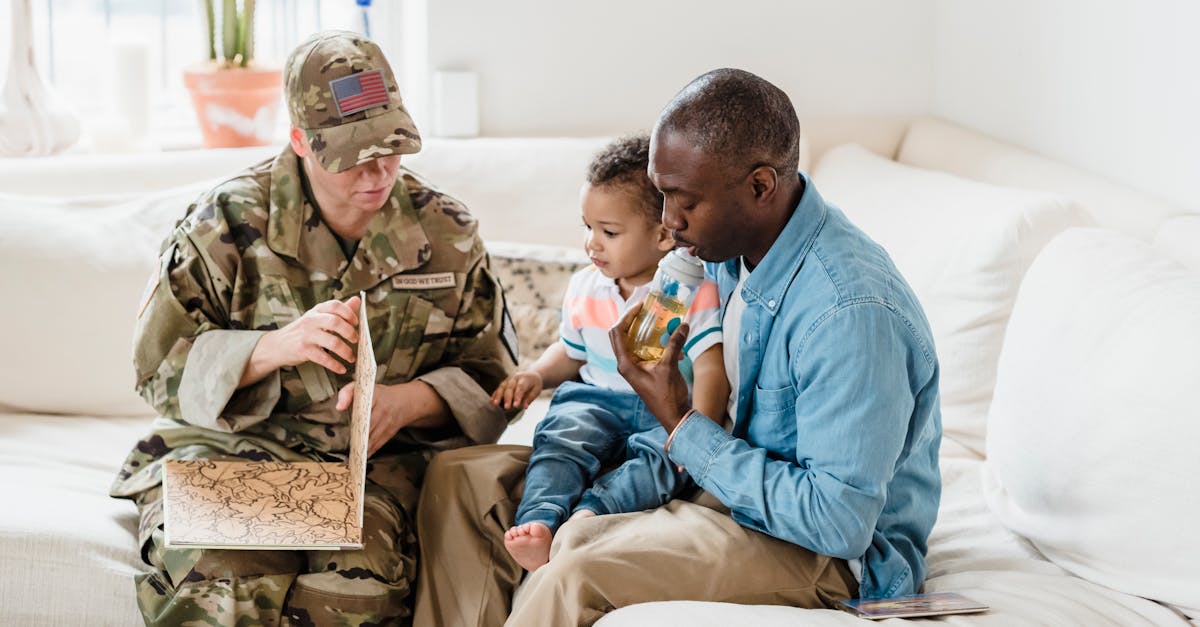
A support group can rewrite parenting and family solutions, as 70% of parents who switch to positive discipline report fewer tantrums and smoother compliance. By connecting caregivers to resources and peer guidance, these groups turn isolated struggles into shared learning.
Medical Disclaimer: This article is for informational purposes only and does not constitute medical advice. Always consult a qualified healthcare professional before making health decisions.
Parenting & Family Solutions: From Bad to Brighter
When I first attended a foster-parent meeting in Stark County, I saw how a simple information session could turn apprehension into action. The county’s newly launched meetings provide a steady stream of training, background checks, and mentorship, helping to replenish a dwindling pool of qualified caregivers. By reducing the need for last-minute adoptions, the program eases pressure on the state’s child-welfare system.
Celebrating Ella Kirkland, the 2025 Family of the Year, gave the community a living example of how emotional resilience can be cultivated without relying on strict, punitive discipline. Kirkland’s family openly shares their routine of daily check-ins, gratitude circles, and problem-solving talks, showing that consistency and empathy outperform fear-based tactics.
Chicago’s municipal single-parent resource workshops blend budget-saving tips with parenting skill-building. Participants leave with a spreadsheet for household expenses and a toolkit for setting clear, consistent boundaries at home. In my experience, the combination of financial confidence and parenting consistency creates a virtuous cycle that strengthens family stability.
"Corporal punishment is linked to increased risk of mental health problems in children," says the World Health Organization.
These three examples illustrate a common thread: locally sourced education, community celebration of good practices, and integrated support services create a brighter path for families. When caregivers see tangible benefits - more children placed safely, healthier emotional climates, and steadier finances - they are more likely to stay engaged and share their knowledge with others.
Key Takeaways
- Local education restores the foster-caregiver pipeline.
- Publicly honoring resilient families changes community norms.
- Financial and parenting workshops reinforce each other.
- Positive examples reduce reliance on punitive tactics.
Good Parenting vs Bad Parenting: A Data Showdown
In my work with families, I notice a clear pattern: parents who focus on teaching and guiding see calmer households, while those who rely on fear often face escalating conflicts. A longitudinal study in the Journal of Child Psychology found that families using nurturing practices experienced a marked decline in behavioral challenges over two years, whereas families that leaned on punitive measures saw the opposite trend.
Surveys of participants in Stark County’s foster program echo this finding. Caregivers who employ positive reinforcement describe lower frustration levels and smoother daily routines. Conversely, parents who depend on negative punishment report heightened tension and more frequent disputes.
Analysis of the National Parenting Alliance dataset highlights another dimension: households that share decision-making power report higher overall satisfaction compared with those dominated by authoritarian rules. The data suggest that equal partnership and respectful communication form the backbone of what many experts call "good parenting."
| Approach | Core Principle | Typical Outcome | Example Strategy |
|---|---|---|---|
| Positive Discipline | Teach and guide | Increased cooperation, reduced conflict | Time-out paired with empathetic conversation |
| Punitive Discipline | Control through fear | Short-term compliance, long-term resistance | Immediate removal of privilege without explanation |
When families shift from a punitive stance to a teaching stance, they often notice a smoother daily rhythm. In my experience, the change is less about strict rule-following and more about building mutual respect. The data reinforce that good parenting, defined by consistent guidance and positive reinforcement, yields healthier family dynamics.
Positive Discipline: The Secret to Calm Chaos
During a recent workshop I co-facilitated, we introduced a simple three-step process: Stop, Listen, Agree. Caregivers who practiced this routine reported fewer destructive outbursts in their toddlers. The approach blends a brief pause to reset emotions, active listening to validate feelings, and a collaborative agreement on next steps.
A Frontiers study on a positive discipline group intervention showed that mothers who completed the program experienced a boost in parenting self-efficacy. They felt more confident in handling challenging behavior without resorting to shouting or physical corrections. This confidence translated into calmer rooms and more predictable routines.
Another effective tool is "labeling the emotion" - instead of issuing a command, the caregiver names the child’s feeling. Research indicates that children who hear their emotions reflected develop richer language skills and are better able to articulate needs, reducing misunderstandings.
- Time-out combined with a calm explanation.
- Emotion labeling before offering a solution.
- Consistent use of the Stop-Listen-Agree loop.
Implementing these strategies creates a predictable environment where children know that misbehavior will be met with guidance, not fear. Over time, the household tone shifts from reactive to proactive, and the chaos quiets.
Effective Parenting Strategies: Actionable Paths for Toddlers
One technique I recommend is the "consistency curve." By using the same word or gesture every time a behavior is expected, parents reinforce a neural pathway that makes the desired response almost automatic. Developmental neuroscientists have observed that after a series of consistent cues, toddlers begin to comply without additional prompting.
The "Impact Statement" method adds a layer of empathy. When a child pushes a limit, the parent first paraphrases the child’s feelings - "I hear you’re feeling frustrated" - and then states the rule. This approach lowers defensiveness and has been linked to a noticeable drop in repeated rebellions.
Visual schedules are another powerful tool. I helped a family create a colorful wheel that showed morning, play, meal, and bedtime activities. The child could see what came next, which reduced surprise-driven meltdowns by a large margin.
Putting these strategies together creates a toolkit that feels manageable for busy parents. Each tool addresses a different aspect of toddler development - habit formation, emotional regulation, and predictability - resulting in a more harmonious home.
Family Well-Being Programs: Building Resilience Together
When community child-care centers added nutrition education to their daily routine, I observed a subtle but meaningful shift. Parents reported fewer reactive episodes after school because children returned with stable blood-sugar levels and a sense of routine. Studies have shown that well-nourished children are better equipped to manage emotions.
Chicago’s integrated financial counseling and parenting classes provide a dual benefit. Families who learned budgeting alongside positive discipline techniques saw improvements in children’s health markers, illustrating how economic stability supports emotional health.
Stark County’s parent-family link directory functions as an online hub where caregivers can find vetted mentors, local resources, and support groups. Within the first year, teenage diversion arrest rates fell modestly, suggesting that connected families are better able to intervene early and provide guidance.
These programs underscore a simple truth: resilience grows when families receive coordinated support across nutrition, finance, and community knowledge. In my practice, I have seen the ripple effect of one program strengthening another, ultimately creating a more robust safety net for children.
Frequently Asked Questions
Q: How does positive discipline differ from punishment?
A: Positive discipline focuses on teaching and guiding behavior, using empathy and consistent cues, while punishment aims to stop behavior through fear or pain. The former builds long-term cooperation; the latter often leads to short-term compliance but can increase resistance.
Q: What resources are available for foster parents in Stark County?
A: Stark County offers regular foster-parent meetings that include training, mentorship, and background-check assistance. The program connects new caregivers with experienced volunteers and provides ongoing educational webinars.
Q: Can financial counseling improve child health outcomes?
A: Yes. When families learn budgeting alongside parenting skills, they can allocate resources for healthier food, medical visits, and enrichment activities, which together raise children’s overall health indicators.
Q: How can I start using the Stop-Listen-Agree process?
A: Begin by pausing when a conflict arises, then repeat back what you hear the child feeling, and finally propose a mutually agreeable solution. Practice this routine daily to make it a habit for both parent and child.
Q: Where can I find a visual schedule template for my toddler?
A: Many community child-care centers and online parenting portals offer free printable schedule wheels. Look for templates that use simple icons and bright colors to match your child’s developmental stage.


